

In a recent post, I talked about my visit to Taipei 101, which currently holds the record for the tallest building in the world, not to mention the fastest elevator in the world. Well, I found out there is a faster way to get down from the top.
In December 2007, base jumper Felix Baumgartner leaped from the observation deck of the building. Five seconds was all it took for his free fall. Those five seconds took months of preparation. The 38-year-old Austrian scoped out the tower on several visits while dressed in various disguises, all the while taking note of the surveillance cameras, security systems and inaccessible areas.
On the day before the jump, Baumgartner hid his parachute in a toilet with the help of a local. The next day, he commenced the secret mission with all the flair you might see in a James Bond film. On the look-out platform, helpers distracted the security team, giving Baumgartner the opportunity to climb the security wall, drop down to another ledge and jump off the building.
Baumgartner made a safe landing on a parking lot. "F*&#ing A! I did it," he exclaimed after completing the first-ever base jump from the tallest building in the world. He hurried to the airport and flew to Hong Kong couple of hours later to avoid arrest.
The jump did, however, have consequences.
Taipei 101 terminated its contract with the security firm in charge of protecting the observation deck. "It has failed in its task to prevent such risky acts from happening," Taipei 101 Spokesman Michael Liu said.
Since then, security has been beefed up and tourists are not permitted to carry large bags onto the observation deck, such as the backpack Chris was carrying with him the day we visited. Lockers are available in the lobby to hold belongings.
http://www.youtube.com/watch?v=s8U-z-SnbJU
Subscribe to far-flung places
Sign up here and receive email alerts when this blog is updated.
Sign up here and receive email alerts when this blog is updated.
Thursday, January 29, 2009


Sunday, January 25, 2009
Panda-monium at the Taipei Zoo
 The Taipei Zoo is already the largest zoo in Asia, but Monday it got an attendance boost when 100,000 people came to see the debut of two giant panda bears that China gave to Taiwan as a symbol of friendship.
The four-year-old pandas, Tuan Tuan and Yuan Yuan went on display Jan. 26, the first day of the Chinese New Year, following a 30-day quarantine. The Taipei Zoo expects the endangered animals to attract one million people per year, but only 22,000 visitors are allowed to see the pandas each day--for only 10 minutes.
 We got our ticket to see the pandas at the front gate, which gave us the time we were allowed to enter the Panda House. All around us, vendors were selling all sorts of panda accessory items. By far, the most popular souvenir was the furry panda hat, which not only commemorated the event, but kept heads warm and dry since the weather was not cooperating.
When we finally did get our chance to enter the Panda house, the building was jammed with media professionals and onlookers. The line went rather fast, but the consequence was not being able to stop, even briefly, in front of the pandas. From what I did see, though, was the animals seemed oblivious to all the chaos around them. They were playing, each one trying to knock the other off a large tree trunk hovering five feet off the ground.
 As we exited, two-year-old Mia Wu was interviewed by TTV--if you want to call it an interview. All of a sudden, a microphone was in her face, and the cameraman was shooting, while the interviewer was saying "Hello. Hello. What did you see?" Mia was just a little taken aback, but she finally responded to the question, "What's that?" as the woman pointed to the clip on panda coin purse attached to Mia's jacket.
"That's how the media is here in Taiwan," Mia's mother, Marci told me. "They can be really pushy."

We wandered through some of the zoo's other exhibits and saw lots of other animals. It left quite an impression on Mia, who woke up the next morning saying, "Elephant, panda, giraffe..."
Oh my!
If you want to see a panda closer to home, only four U.S. zoos have them--Atlanta, Memphis, San Diego and Washington, D.C.


Happy Lunar New Year
Gong Xi Fa Chai (Happy New Year), everyone!
Here's the most famous Chinese New Year song, remixed for you:
Here's the most famous Chinese New Year song, remixed for you:
When two cultures collide at dinnertime
 We had the honor of being invited to a Chinese New Year's Eve dinner at the Wu family home. The "reunion dinner" is a grand feast, usually held in the home of the senior most member of the family, but not in this case.
Photo at right, back row: Wu, Ching-wen (the middle brother) ; Wu, Jen-wen (the youngest brother); Wu, A-min (William's dad); Zheng, Su-ying (William's mother); Wu, Marci (holding Mia); Wu, Shiang-wen (William); Hu, Chi-shiang (A-min's brother-in-law); middle row: Wu, Shin-lu (Ching-wen's oldest daughter); John Parrette (Marci's father); bottom: Wu, Shing-long (Ching-wen's youngest daughter).
 All of the dishes were neatly arranged around the table, having been first offered to the god Guanyin in the family's upstairs shrine (photo at right).
After each family member stood before Guanyin for a blessing, we headed to the dinner table. There were all kinds of delicious treats, including General Tsao's Chicken, leafy greens sauted in garlic, liver, soup and the special new year fish. It's important that the fish not be eaten completely as it symbolizes abundance. So, if there are leftovers, it indicates "there will be surpluses every year."
We each had our own bowl of rice to start with and we all grabbed what we wanted from the center of the table with chopsticks. There wasn't alot of conversation, but what we did talk about was routed through William or Marci, who would do the translating.
When we were finished we went into the living room for the after-dinner tea and small talk. There were sweet snacks on the coffee table, and the family opened the huge box of Malley's chocolates I had brought from home. Mia was drunk on chocolate by the end of the night.
 I noticed two television sets next to each other in the room, and when I inquired about them, I found out one was used for karaoke. Soon enough, William's dad broke out the song book. Two pages of western songs were mixed in with Taiwanese and Mandarin selections.
After a practice run that didn't go to well, Marci and I sang, "The Sound of Silence" into the microphone. Then A-min, Chi-Shiang and William took turns singing a Taiwanese tune.
Even Shin-long and Mia got into the action, singing Twinkle, Twinkle Little Star (in Mandarin) and the Miao-Miao song (a children's song about cats that I've been hearing in the car alot called,"shaio hua miao").
Su-ying came in and passed out
 red envelopes to the kids (see photo). The Hong-bao is a monetary gift which is given during holidays or special occasions. The red color of the envelope symbolizes good luck and is supposed to ward off evil spirits. According to Wikipedia: "The amount of money contained in the envelope usually ends with an even digit, in accordance withChinese beliefs; for instance 88 and 168 are both lucky numbers, as odd-numbered money gifts are traditionally associated with funerals. But there is a widespread tradition that money should not be given in fours, or the number four should not appear in the amount, as the number itself has a similar tone to the Chinese character for "death", and it signifies bad luck for many Chinese."
After a fun-filled evening, we headed home with our bellies full!
Saturday, January 24, 2009
Out with the old, in with the new
As the year of the rat comes to a close, Chinese folks are busy cleaning their houses and getting rid of all the broken down appliances, ill-fitting clothes and other things that they don't want. Doing this invites fresh new energy into the home and attracts good luck in the year to come.
Before we started our day, William Wu was in the driveway washing his car, despite cold temperatures. "It's partly because it's the New Year, but it's just really dirty," he told me as he finished up.
 In the last week, the trash truck has been extra busy, too. It already comes through the neighborhood twice a day, but the volume of discarded material has increased. When residents hear the strains of the "Fleur de Lise" being broadcast over a loud speaker, they come rushing out of their homes with bags and fling them into the back of the truck. Usually the neighbors linger and chat long after the trash truck is gone, but today, they run back inside because they aren't used to the cold weather (it's in the 40s).
Or perhaps they are busy preparing their Chinese New Year Eve's dinner, which will be served tonight.
All this hard work pays of with many chore-free days after the new year. In fact, you won't even see a broom for a while. According to tradition, people have to put their brooms and dust pans away, and cannot use them during the first few days, otherwise all the new luck will sweep away!
Before we started our day, William Wu was in the driveway washing his car, despite cold temperatures. "It's partly because it's the New Year, but it's just really dirty," he told me as he finished up.
 In the last week, the trash truck has been extra busy, too. It already comes through the neighborhood twice a day, but the volume of discarded material has increased. When residents hear the strains of the "Fleur de Lise" being broadcast over a loud speaker, they come rushing out of their homes with bags and fling them into the back of the truck. Usually the neighbors linger and chat long after the trash truck is gone, but today, they run back inside because they aren't used to the cold weather (it's in the 40s).
 Or perhaps they are busy preparing their Chinese New Year Eve's dinner, which will be served tonight.
All this hard work pays of with many chore-free days after the new year. In fact, you won't even see a broom for a while. According to tradition, people have to put their brooms and dust pans away, and cannot use them during the first few days, otherwise all the new luck will sweep away!
Friday, January 23, 2009
Hot Spots in Taiwan
 I bet you didn't know Taiwan was such a hot spot. In fact, it is...literally.
Taiwan is ranked among the top 15 hot spring sites in the world, according to Asia-Planet.net. The country lies on a fault line where two tectonic plates meet in the Pacific Ocean. As a result, there are tons of places--more than 100--where warm water bubbles up from underneath the earth's surface.
Taiwan also is home to a rare saltwater hot spring, located on Green Island. Saltwater springs are so rare that they are found only in two other places in the world—on the Japanese island of Kyushu and in Northern Italy.
 I sampled my first Taiwanese hot spring at the Spring Park Urai Resort and Spa in Wulai. The name of the town derives from the Atayal phrase, kirofu ulai, meaning "hot and poisonous." Despite the warning, the water is clear, colorless, and odorless; it is said that bathing in it keeps the skin moist, and that drinking it is effective against stomach problems.
Wulai boasts the largest free-of-charge hot-spring area in Taiwan, and I have to admit that I would have preferred a more rustic, bathe-in-the-river experience. The resort offered a more luxurious experience, but when it comes right down to it, I essentially rented a bath tub for an hour.
The steaming hot sunken tub was set in grey slate stone with views of the Nanshih River through a large window. The resort provided towels, flip flops, a rinsing bucket and toiletries.
Apparently there is bathing etiquette that one must follow, especially if you are in a public hot spring. For example, unless the pools are mixed sex, you're expected to be naked, and you should shower before getting in. It's best to wait at least an hour after eating before bathing, and to avoid hot springs altogether if you've been drinking alcohol.
I think I'm going to stick to bathing at home by myself from now on.
This little piggie went to the market
 If you're ever planning to go to the Dihua Street Market in Taipei, make sure you go hungry. By the time you've walked the length of the market, you'll have a full stomach without ever having emptied your wallet.
This week, the street was packed with people--if not the entire population of Taiwan--all sampling what the vendors had to offer, and stocking up on food for the Lunar New Year holiday (Jan. 26). While the street is often busy, the days and weeks leading up to the new year are the most hectic and exciting. According to photographer Dennis Flood, "Taiwanese people love food, shopping, and "re-nao" (noisy, lively action) in general. He adds: "What better place to find it than DiHua Jie."
 So here we are in the midst of the crowd, being jostled around, pushed from behind, and at the same time being bombarded with vendors pushing their products. There are all kinds of tea, dried meats, fish, dried fruits and vegetables, octopus, candy, rice cake balls, milk-and-peanut nougat, and so much more. Chris took a liking to the wasabi-coated nuts and beans and I went out on a limb and ate dried squid.
We're looking forward to seeing how all these ingredients come together in one meal, when we go to the Wu house for the lunar new year's feast this weekend!

Wednesday, January 21, 2009
Count your blessings
 There's a god for everything at Longshan Temple--the largest buddhist temple in Taipei, which dates back to 1738. So, depending on what's on your mind, you might want to get a blessing from the patron of pregnant women, the god of scholarly pursuits or the god of business people. But the gods getting the most visitors this week is Guanyin and Matsu, which watch over people while traveling.
 CNN reported that 1,800,000 people in China are making their way back home for the Chinese Lunar New Year this week. That's more than the population of many countries. So, Guanyin and Matsu (shown at right) are getting a lot of action. I even stopped by to ask them to keep me and Chris safe on our trip to Taiwan.
 I noticed a strange ritual taking place in front of the shrine devoted to the love god. People were grasping red crescent-shaped wood blocks between their praying hands, then tossing them on the ground. It turns out they are oracle blocks, which perform the same function as a Magic Eight Ball. You ask a question and the way the blocks land tell you the answer.
If the blocks are both face down, it means one thing, if the blocks are both face up, it means another. However, the ideal configuration is to have one block face up and the other face down. That means you got the answer you wanted. If you didn't get the right answer, rephrase the question and try again.
William, Marci's husband, put it this way:
 If you have a problem with your neighbor, you might see if it's the neighbor's fault. And if it isn't, you re-ask to see if it's your fault. And then it'll help you to figure out the next course of action to fix the problem.
No matter how people cope with the things that come their way, there is no doubt that Longshan Temple is a great place to get away from the hustle and bustle of the city that surrounds it.
On Top of the World
 In 2004, Tapei 101 became the the tallest building in the world at 1,670.60 feet high, but that's going to change soon.
 I just read that the top piece of the Burj Dubai was just put into place on January 17, making it the tallest free-standing structure ever built at a whopping 2,684 feet. However, it will not take the title of "tallest building" until it officially opens sometime later this year.
 So, Taipei 101 is still on top, and that's where we found ourselves earlier this week, too.
It took less than 40 seconds to reach the observation deck thanks to some space-age technology. The high-speed elevator that ascends at a speed of 37 mph, has a pressurized cabin, like an airplane, that makes take-off more comfortable and eliminates ear-popping. And the elevator is covered in the same material that is found on the space shuttls to protect it from the high heat and friction involved in leaving the earth's atmosphere.
 On a clear day, you might see the mountains surrounding the city, but most days it seems to be smoggy from the pollution that settles in the valley where Taipei is located. Nonetheless, from this observation point, you can see how the city is spread out.
The free audio tour (offered in English) is a great travel guide to the city, offering suggestions of where to go when you're in Taiwan, whether or not you can see it from the sky-high vantage point.
The audio guide also offers spots to get a good view of Taipei 101 itself, such as Elephant Mountain, Maokong tea plantations (shown in the bottom photo) and the National Sun Yat-sen Memorial Hall.
Facts About Taipei 101:
Taipei 101 has 101 stories above ground and five underground. Upon its completion Taipei 101 claimed the official records for:
--Ground to highest architectural structure (spire): 509.2 metres (1,670.60 ft). Previously held by the Petronas Towers 452 m (1,483 ft).
--Ground to roof: 449.2 m (1,473.75 ft). Formerly held by the Sears Tower 442 m (1,450 ft).
--Ground to highest occupied floor: 439.2 m (1,440.94 ft). Formerly held by the Sears Tower 412.4 m (1,353 ft).
--Fastest ascending elevator speed: 16.83 m/s (55.22 ft/s) (60.6 km/h, 37.7 mi/h).
--Largest countdown clock: On display every New Year's Eve.
--Tallest sundial.
Monday, January 19, 2009
How to eat steamed dumplings and other food adventures
I can't think of a better way to put my limited Mandarin to use than to order my first meal in Taiwan. The only problem is I don't know what to order! Chris and I followed our noses to a small hole-in-the-wall place, where someone was grilling what appeared to be tofu and rolled omelettes. There was a lot pointing, motioning and shrugging going on until we settled on a fried egg and hot tea. Not being enough to sustain us, we ordered more. This time, Chris was able to order pot stickers (guo tie) and the "cong you bing" or spring-onion pancake (my favorite!).
 We didn't have to work so hard for our food at lunchtime, however. A college friend, John Eastwood--who now lives in Taipei--invited us to join him at a Taiwanese institution, Din Tai Fung. This restaurant, which has other locations throughout Asia and even one in the U.S. (Los Angeles), is quite famous for its "Xiao Long Bao," known in the west as steamed dumplings. On his TV show, "No Reservations," Anthony Bourdain proclaimed the dumplings to be the best on earth when he visited in 2003. According to the Taipei Times, "He had nothing but high praise for the restaurant, especially when it came to the joint's 'incredible' crab dumplings."
As we waited for a seat--the place was packed--we watched the dumplings being made by a group of men we dubbed "the dumpling gang." The masked men looked more like doctors performing surgery in their head-to-toe white garb, surgical masks and gloves. Whether mixing the dough, rolling it out, stuffing it with a variety of different fillings, pinching the dough together and placing it in the steam basket, each one of the employees had a critical job to perform.
But, nothing was more important than savoring these treats and we readily set to the task. The dumplings come with instructions for the uninitiated:
1. Mix soy sauce and vinegar in the dish supplied with fresh ginger slices. They suggest a ration of 1 portion of soy sauce to 3 portions of vinegar.
2. With chopsticks, grasp the dumpling and dip it in the sauce.
3. Place the dumpling on the provided spoon. Using your chopsticks, carefully poke a small hole in the dumpling to release the hot broth inside.
4. Place some ginger on the dumpling and eat together with the broth.
We repeated these steps over and over until all the steam baskets were empty and we were ready for a nap.
 We didn't have to work so hard for our food at lunchtime, however. A college friend, John Eastwood--who now lives in Taipei--invited us to join him at a Taiwanese institution, Din Tai Fung. This restaurant, which has other locations throughout Asia and even one in the U.S. (Los Angeles), is quite famous for its "Xiao Long Bao," known in the west as steamed dumplings. On his TV show, "No Reservations," Anthony Bourdain proclaimed the dumplings to be the best on earth when he visited in 2003. According to the Taipei Times, "He had nothing but high praise for the restaurant, especially when it came to the joint's 'incredible' crab dumplings."
As we waited for a seat--the place was packed--we watched the dumplings being made by a group of men we dubbed "the dumpling gang." The masked men looked more like doctors performing surgery in their head-to-toe white garb, surgical masks and gloves. Whether mixing the dough, rolling it out, stuffing it with a variety of different fillings, pinching the dough together and placing it in the steam basket, each one of the employees had a critical job to perform.
But, nothing was more important than savoring these treats and we readily set to the task. The dumplings come with instructions for the uninitiated:
1. Mix soy sauce and vinegar in the dish supplied with fresh ginger slices. They suggest a ration of 1 portion of soy sauce to 3 portions of vinegar.
2. With chopsticks, grasp the dumpling and dip it in the sauce.
3. Place the dumpling on the provided spoon. Using your chopsticks, carefully poke a small hole in the dumpling to release the hot broth inside.
4. Place some ginger on the dumpling and eat together with the broth.
We repeated these steps over and over until all the steam baskets were empty and we were ready for a nap.
Friday, January 16, 2009
Will President Obama be seeing red?
On the day of his inauguration, it's certain that president-elect Barack Obama will be opening gifts from the leaders of other countries. France, for example, sent a 4.5-pound package of Roquefort cheese.
But would red underwear be appropriate to send the new president?
 In China and other Asian countries, red underwear is one of the most popular gifts to give around the Chinese New Year, which falls on January 26 this year.
Markets and department stores stock the red underwear, generally sporting the pertinent zodiac animal. This year, it will be an ox, which by the way is Obama's zodiac sign.
According to lore, it's even more critical for someone born under the current zodiac sign to wear red to help ward off dangers that may come his or her way, because the "benming nian" (or the meeting of one's zodiac year) can be an unlucky year.
So, if there's any advice I can offer to Obama on his inauguration day, it would be to open the gift from China (or Taiwan) first.
In case they didn't send any, we've got him covered!
But would red underwear be appropriate to send the new president?
 In China and other Asian countries, red underwear is one of the most popular gifts to give around the Chinese New Year, which falls on January 26 this year.
Markets and department stores stock the red underwear, generally sporting the pertinent zodiac animal. This year, it will be an ox, which by the way is Obama's zodiac sign.
According to lore, it's even more critical for someone born under the current zodiac sign to wear red to help ward off dangers that may come his or her way, because the "benming nian" (or the meeting of one's zodiac year) can be an unlucky year.
So, if there's any advice I can offer to Obama on his inauguration day, it would be to open the gift from China (or Taiwan) first.
In case they didn't send any, we've got him covered!
Thursday, January 15, 2009
A Taiwan primer
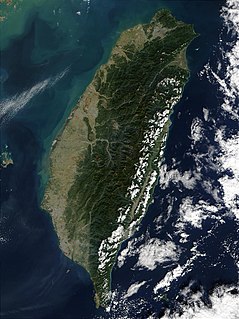 Well, the time has come for a trip to Taiwan. As I was preparing for the visit, I realized there were a few interesting tidbits about the country that most people probably don't know. In fact, more than a handful of people got it confused with Thailand.
 "Isn't that where they will execute you for having weed?" asked one friend.
"Asia confuses the hell out of me," said another after making the common mistake.
Well, here are some facts about Taiwan you can talk about at dinner parties (compiled from a variety of sources):
• Taiwan is an island located in East Asia off the coast of China. The People's Republic of China (PRC) acquired the island from Japan in 1945, although the PRC has never controlled it. On occasion, the red dragon will breathe fire on the tiny island when it is perceived as being too pro-independent, but things generally calm down again.
• With a population of 23 million people, Taiwan is one of the most densely populated countries in the world, second only to Bangladesh. In Taipei alone Taiwan, there are an average of 25,219 persons living in each square mile.
• The earliest inhabitants are of Austronesian origin, Malay and Polynesian more specifically.
• Taiwan's National Palace Museum houses more than 650,000 pieces of Chinese bronze, jade, calligraphy, painting and porcelain. The collection moved from the Forbidden City in Beijing in 1949 when the Kuomintang party lost control of mainland China and fled to Taiwan. The collection, estimated to be one-tenth of China's cultural treasures, is so extensive that only 1 percent is on display at any time.
• Popular sports in Taiwan include basketball and baseball. Cheerleading performances and billiards are quite fashionable. Badminton is also common.
• Karaoke, drawn from contemporary Japanese culture, is extremely popular in Taiwan, where it is known as KTV.
• Taiwan has a high density of 24-hour convenience stores, which in addition to the usual services, provide services on behalf of financial institutions or government agencies such as collection of parking fees, utility bills, traffic violation fines, and credit card payments.
• Taiwan is the world's largest producer of computer goods.
• A Taiwanese company has begun manufacturing dinnerware out of wheat, effectively allowing you to eat your plate after you've finished your meal. Inventor Chen Liang-erh spent 10 years and $1.4 million developing the product.
• Bubble tea and milk tea were invented in Taiwan and can be tried at many restaurants in the U.S. (I recommend trying one at the Mint Cafe in Cleveland).
• Ang Lee, a native of Taiwan, has directed critically acclaimed films such as Crouching Tiger Hidden Dragon, Eat Drink Man Woman, Sense and Sensibility, Brokeback Mountain, and Lust, Caution
Tuesday, January 13, 2009
Buffalo gets a boost
Nothing gets my heart racing more than the promise of visiting an exotic far-away destination, but on a day-to-day basis, I extol the virtues of places around Lake Erie. In my regional travels, I have found some true gems, but I really hold Buffalo, New York, in high regard.
And, apparently, so does The New York Times, which ranked the city one of "The 44 Places to Go in 2009," in the January 11 travel section.
The Lake Erie city ranked #37 on the list, which also included incredible international spots, such as the Seychelles, Zambia and Bhutan. According to The Times, Buffalo got high marks for being able to "thrill culture junkies," specifically noting the recent opening of the Burchfield Penney Art Center.
There's a lot more to Buffalo, whether you head downtown for free Thursday night concerts at Lafayette Square or wander the funky neighborhood of Elmwood Village.If you're lucky, you might see Chuck the Bubble Guy blowing bubbles from his third floor apartment in nearby Allentown.
For more information about Buffalo, check out this video:
And, apparently, so does The New York Times, which ranked the city one of "The 44 Places to Go in 2009," in the January 11 travel section.
The Lake Erie city ranked #37 on the list, which also included incredible international spots, such as the Seychelles, Zambia and Bhutan. According to The Times, Buffalo got high marks for being able to "thrill culture junkies," specifically noting the recent opening of the Burchfield Penney Art Center.
There's a lot more to Buffalo, whether you head downtown for free Thursday night concerts at Lafayette Square or wander the funky neighborhood of Elmwood Village.If you're lucky, you might see Chuck the Bubble Guy blowing bubbles from his third floor apartment in nearby Allentown.
For more information about Buffalo, check out this video:
Saturday, January 10, 2009
The Future of Airport Security
 Today, my confidence in airport security got a boost when I read a Budget Travel blog entry about the Airport Security Check Point from toy manufacturer Playmobil.
 I thought it might be a great tool for teaching children the finer points of navigating an airport. Unfortunately, according to a few Amazon customers, it demonstrates just how lax security can be.
One customer commented: "We placed a deadly fingernail file underneath the passenger's scarf, and neither the detector doorway nor the security wand picked it up. My son said 'that's the worst security ever!' But it turned out to be okay, because when the passenger got on the Playmobil B757 and tried to hijack it, she was mobbed by a couple of other heroic passengers, who only sustained minor injuries in the scuffle, which were treated at the Playmobil Hospital."
If you want an entertaining read, browse through the rest of the reviews. The problem is only that I can't seem to find the toy listed on the manufacturer's website. However, you can order the Police Station with prison cell, for unruly or deadly plastic airline passengers on Playmobil's jet plane.
Thursday, January 08, 2009
New Year, New Blog Changes and New Travels
The new year means new beginnings, and I'm starting of the year with a new look. The next time you see my blog, you will notice a few changes.
I'm in the process of upgrading the site. Not only the design has changed, but I've been trying to add more robust features and testing out a new way to receive email alerts when the blog gets updated.
when you have a moment, please visit farflungplaces.blogspot.com and sign up at the top of the page. I will be phasing out the Yahoo Group over the coming weeks, but only after I've tested out the new subscription service during my next trip.
Yep, Chris and I are heading out of town next week to Taiwan, where I hope to bring you stories about the Chinese New Year. I'll be ringing in the Year of the Ox with
friends Marci, her husband, William, and his family (who only speak Taiwanese and Mandarin, so I'm sure I'll have plenty to blog about.
Here's to a new year and fresh starts. I wish you all well with all your resolutions.
I'm in the process of upgrading the site. Not only the design has changed, but I've been trying to add more robust features and testing out a new way to receive email alerts when the blog gets updated.
when you have a moment, please visit farflungplaces.blogspot.com and sign up at the top of the page. I will be phasing out the Yahoo Group over the coming weeks, but only after I've tested out the new subscription service during my next trip.
Yep, Chris and I are heading out of town next week to Taiwan, where I hope to bring you stories about the Chinese New Year. I'll be ringing in the Year of the Ox with
friends Marci, her husband, William, and his family (who only speak Taiwanese and Mandarin, so I'm sure I'll have plenty to blog about.
Here's to a new year and fresh starts. I wish you all well with all your resolutions.
Thursday, November 20, 2008
Online image editors make sharing photos easier when traveling
When I travel, I like to upload photos to share with the folks back home. However, the computers at hotels or internet cafés don't always have imaging software loaded on them.
That's where online image editors come in handy. There are many out there, but this year, Adobe Photoshop launched Photoshop Express, a pared down version of it's miraculous image editing software that costs hundreds of dollars to buy.
It may not have all the bells and whistles that the original program has, but you can upload, sort, resize, crop and store up to two gigabytes on the site for free. After that, you can share them on Flickr, Facebook, on a mobile phone or on a blog.
You can also find a list of other image editors here.
PHOTOSHOP EXPRESS TUTORIAL:
That's where online image editors come in handy. There are many out there, but this year, Adobe Photoshop launched Photoshop Express, a pared down version of it's miraculous image editing software that costs hundreds of dollars to buy.
It may not have all the bells and whistles that the original program has, but you can upload, sort, resize, crop and store up to two gigabytes on the site for free. After that, you can share them on Flickr, Facebook, on a mobile phone or on a blog.
You can also find a list of other image editors here.
PHOTOSHOP EXPRESS TUTORIAL:
Saturday, November 08, 2008
Photo appears in National Geographic Traveler magazine
 My dream of being published in a National Geographic publication come true! A photo of mine appears in the November/December 2008 issue of National Geographic Traveler magazine.
The photo of an Argentine man grilling beef over an open flame, which originally appeared on this blog in April 2006 (click here to read the original entry), was chosen to illustrate a woman who describes her first Argentine asado (cookout).
Traveler's Senior Photo Editor Daniel R. Westergren found the image, of all places, on my Flickr page in late September. Flickr is a photo-sharing website, which hosts more than three billion images worldwide.
Many photographers believe they've reached the top when they've appeared in National Geographic. For me, this is just the beginning.

Sunday, October 19, 2008
Bargaining Power
Face it. Most women like to shop.
But shopping at handicraft markets around the world is akin to shopping for a used car. There's a lot of haggling back and forth over the price, which has a tendency to put off some people that are accustomed to paying the advertised price. But if you don't play the game, you'll not only walk away with a bigger hole your pocket, but you'll also contribute to further price inflation for future tourists.
 But, there are strategies you can use to help come to a mutually agreeable price and not endure snickers from vendors behind your back.
Do reconnaissance. Check out what products the airport gift shops carry when you first arrive in the country. Note the prices on items you like, and never pay those amounts in the market. Goods at airport gift shops, even here at home, are way overpriced--the markup can be as great as 300 percent.
Shop Around. Most vendors at a handicrafts market carry the same stuff. As you wander past the stalls, casually ask the price of the things you're interested in, but don't linger. Prices at the perimeter of the market tend to be higher, so keep going further. The price invariably goes down.
Never accept the first price. If you are ready to try your hand at bargaining, the first price is ridiculous, and the vendor knows it. Just smile, and say, "no thanks."
Ask for a discount. After the first price is given, ask for a discount. You might have a vendor say, "How much will you pay?" I usually ignore this question, and ask, "How much is the discounted price." The figure they tell you is the real starting price to start the haggling process.
Offer one-third to half of the asking price. Start with a low figure. The vendor might laugh or try to convince that you've offended him/her, but don't let this ruffle your feathers.
Walk Away. I can't tell you how many times I've walked away from a price that I felt was too high, and suddenly it dropped significantly. At one stall in Ecuador, the starting price on a blanket was $40, but suddenly dropped to $10 when I walked away.
 Buy from a man. I can't put my finger on it, but it seems like a get a better deal when I buy from a male vendor. It's not that he succumbs to my feminine wiles, I just think that female vendors drive a harder bargain.
Buy in Bulk. Often times, you can get a deeper discount if you want to buy several items once you've settled on a price for one object. If one object costs $2, ask for three for $5.
Have fun. Never yell at a vendor, or get angry. That never gets you anywhere.
These are just a few suggestions for jump starting your confidence when shopping abroad, although there are more ways that may be just as or more effective.
My friends, Jennifer and Adrianne, developed a team bargaining method in Ecuador. If either one of them were interested in something, she would ask, "Do you think it's my style?" The operative word--style--would indicate that bargaining was about to commence. The friend would step up and say that it wasn't her style, examine it closer for flaws, and they'd try the walk-away method.
That worked well until the last day of our trip. Jennifer was enamored with some black and white chulucana pottery. She was determined to buy it, and she wore her eagerness openly. I asked her if it was her style. She said "Oh, yes!"
Adrianne and I just looked at each other, and knew she was in trouble. Sure enough, the total came to $33 for several pieces, and she couldn't even get $3 off the price to make it an even $30.
But shopping at handicraft markets around the world is akin to shopping for a used car. There's a lot of haggling back and forth over the price, which has a tendency to put off some people that are accustomed to paying the advertised price. But if you don't play the game, you'll not only walk away with a bigger hole your pocket, but you'll also contribute to further price inflation for future tourists.
 But, there are strategies you can use to help come to a mutually agreeable price and not endure snickers from vendors behind your back.
 Do reconnaissance. Check out what products the airport gift shops carry when you first arrive in the country. Note the prices on items you like, and never pay those amounts in the market. Goods at airport gift shops, even here at home, are way overpriced--the markup can be as great as 300 percent.
Shop Around. Most vendors at a handicrafts market carry the same stuff. As you wander past the stalls, casually ask the price of the things you're interested in, but don't linger. Prices at the perimeter of the market tend to be higher, so keep going further. The price invariably goes down.
Never accept the first price. If you are ready to try your hand at bargaining, the first price is ridiculous, and the vendor knows it. Just smile, and say, "no thanks."
Ask for a discount. After the first price is given, ask for a discount. You might have a vendor say, "How much will you pay?" I usually ignore this question, and ask, "How much is the discounted price." The figure they tell you is the real starting price to start the haggling process.
Offer one-third to half of the asking price. Start with a low figure. The vendor might laugh or try to convince that you've offended him/her, but don't let this ruffle your feathers.
Walk Away. I can't tell you how many times I've walked away from a price that I felt was too high, and suddenly it dropped significantly. At one stall in Ecuador, the starting price on a blanket was $40, but suddenly dropped to $10 when I walked away.
 Buy from a man. I can't put my finger on it, but it seems like a get a better deal when I buy from a male vendor. It's not that he succumbs to my feminine wiles, I just think that female vendors drive a harder bargain.
Buy in Bulk. Often times, you can get a deeper discount if you want to buy several items once you've settled on a price for one object. If one object costs $2, ask for three for $5.
Have fun. Never yell at a vendor, or get angry. That never gets you anywhere.
These are just a few suggestions for jump starting your confidence when shopping abroad, although there are more ways that may be just as or more effective.
My friends, Jennifer and Adrianne, developed a team bargaining method in Ecuador. If either one of them were interested in something, she would ask, "Do you think it's my style?" The operative word--style--would indicate that bargaining was about to commence. The friend would step up and say that it wasn't her style, examine it closer for flaws, and they'd try the walk-away method.
That worked well until the last day of our trip. Jennifer was enamored with some black and white chulucana pottery. She was determined to buy it, and she wore her eagerness openly. I asked her if it was her style. She said "Oh, yes!"
Adrianne and I just looked at each other, and knew she was in trouble. Sure enough, the total came to $33 for several pieces, and she couldn't even get $3 off the price to make it an even $30.
Tuesday, October 14, 2008
Journey to the Center of the Earth
 The equator lies about an hour's drive north of Quito. But until the invention of GPS navigation, the true "line" between the north and south hemispheres was as scientific as someone building a monument and claiming it was located at the equator.
 Various markers have come and gone in the modern age, but only one lies exactly on the equator, and it's not the more popular site called Mitad del Mundo (Spanish for the Middle of the World, which is off by about 240 meters.
Then along came the Quitsato Project--scientific research that began in June 1997 in an effort to establish the exact location of the imaginary line. As it turns out (big surprise), ancient cultures had already plotted the equator exactly. They had a complex knowledge of astronomy, which helped them plot agricultural calendars, climates, seasons and seasonal festivities.
The Quitsato Project found links between various archaeological sites, including one called "Catequilla," which is located at ground zero: latitud 0˚0'0". Although its significance had been lost over time, the research confirmed that the location of this place was not a coincidence.
To raise money for more research, and "to rescue, renovate and dignify the concept of the Middle of the World, which is seated at the base of the cultural identity of the Ecuadorians and their history," the group has built a giant sundial on the North Panamerican Highway between Quito and Cayambe, which marks the exact middle of the world. In exchange for a small donation, you can straddle the equator, with one foot in the north hemisphere and the other in the south.
The sundial measures 177 feet across, and has a tall orange pole in the center that marks the hour and month according to the transit of the sun. Even better, the structure can be observed by satellite thermal images.
Unfortunately, despite it's size and easy-to-find location, our driver had no idea where it was. When we told him we wanted to visit the site, he was baffled. He told us a police officer had directed him to another spot outside of Cayambe. When we got there, we saw an abandoned building with a globe in front.
One of my travel companions, Jennifer, knew instantly that we were in the wrong place. "No," I translated for her. "It's suppose to have a big sundial."
 We asked the driver to call the phone number we had for the place, but he said he didn't have cell service in the mountains where we were. (I turned on my cell phone and got a perfect signal.) Then he said he didn't have minutes left on his phone card inserted. And wouldn't you know it, my cell phone didn't work properly (or I just couldn't figure out the right country and city prefixes).
 We took a few pictures at the wrong place (see photo). I thought we had no chance of seeing the sundial, so made the most of the situation. Jennifer suffered miserably through a few photos at the fake equator, which we later deleted at her request.
And after a game of good cop, bad cop, the driver said, "Well, there is this one place I know about."
 Perhaps he thought we would complain to the hotel that arranged the trip between Otavalo and Quito, or perhaps he thought we stopped in Cayambe for directions (when we requested a pit stop). Either way, he pulled off the road at Kilometer 47, and after peering skeptically at the site, we discovered we were in the right place.
 Our driver explored the area with as much interest as the crazy gringas, staring intently at the scientific displays inside the orange tube. While he didn't apologize to me, he admitted that he thought we were confusing this spot with the ancient site, Catequilla, which was further away.
In the end, we all left with some cheesy photos, and as the Quitsato web site states, "a new perspective on our planet, one with balance and unity."
Furthermore, balance was restored between us and our driver, and we returned to Quito happy...and he made it home in time to watch Ecuador beat Chile 1-0 in soccer in a 2010 World Cup qualifier.
Sunday, October 12, 2008
Animal Attraction
 "How much for that chicken?" I asked a man who was strolling through Otavalo's animal market with a live chicken under his arm.
"AHHHHH,"he responded shoving the bird in my arms. "It's a great chicken. Look here, under the wing. It's a beautiful yellow color. This is a national chicken. There's nothing better."
"But how much?"
"For you, $15."
I had no idea what I was going to do with a live chicken, but the market was an incredible ethnographic experience for my first morning in this highland town nestled in a valley between a cluster of dormant volcanos.
At six o'clock in the morning, an empty field on the outskirts of town begins to fill up with trucks filled with cows, horses, pigs, chicks, ducks, guinea pigs, rabbits, kittens, dogs, and more being brought to auction. Crowds of people, whether buying or selling, meander through the mud and muck checking out their future meal.
A gigantic pig went for about $300--roughly $1 a pound, I'd guess. I think the man who bought it should have had a discount. The critter wasn't behaving so well, so it took three people to wrap a rope around its neck. It may have been the same pig that I later heard squealing loudly on the street. The owner kicked it a few times in the head and shoved it in the back of a truck.
 I inquired about a turkey ($38), then a guinea pig (only $2!).
 Sadly, the guinea pig is considered a food item, not a pet. And the price goes up to around $6 during holidays like Mother's Day. This is surprising, considering there seems to be a surplus of these little furry rodents in the surrounding countryside. A nearby lagoon is named after the cuy (its quechua name) due to its proliferation in the area.
My travel companions, Jennifer and Adrianne, considered buying one for Jennifer's birthday. We really weren't planning to eat it, but we imagined that it would have been fun to put it on a leash and lead it around town for the day, then sell it to someone else!
We left the animal market empty handed, but I caught myself a runaway kitten on the way out, which I returned to its vendor. It may have been the same kitten I heard mewing from inside a woman's bag as she walked down the street on her way home to solve a mouse problem.
Subscribe to:
Posts (Atom)
